top of page

All Posts
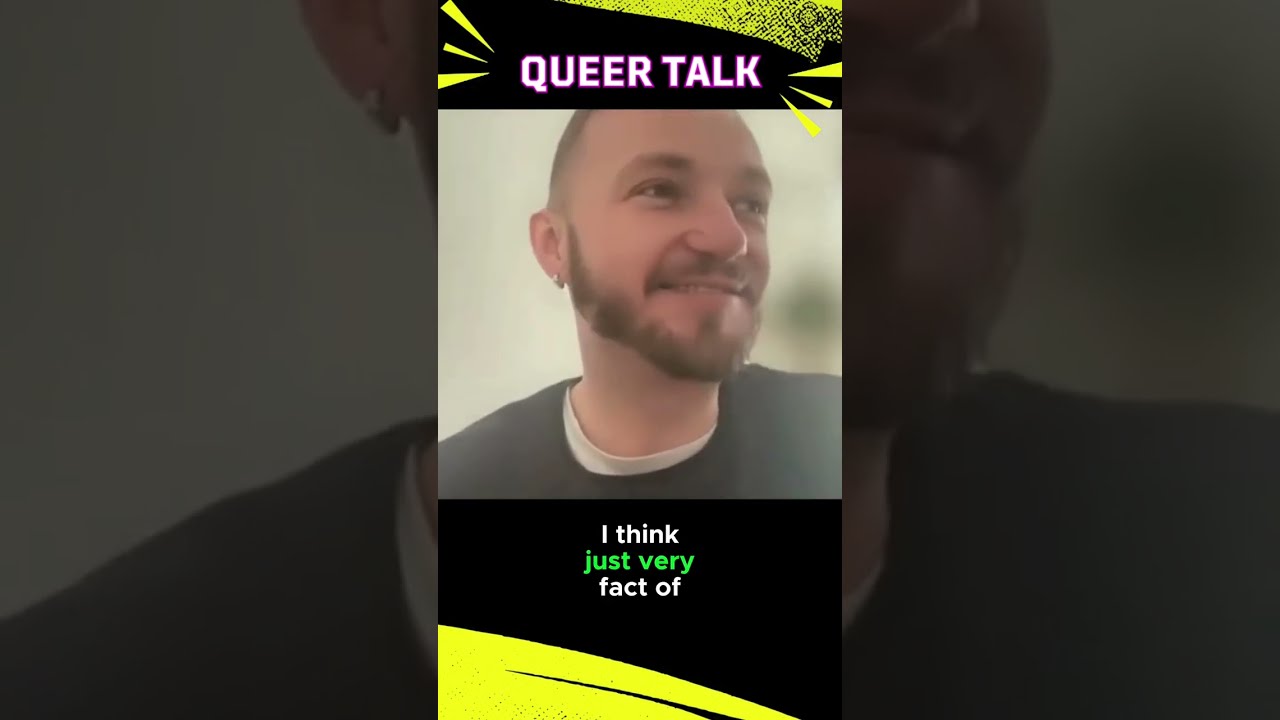
Season One: Episode Three
Maksym Dziarmagais a rising star in Belgium’s queer comedy scene and the dynamic founder behind Queertastic House of Comedy. His sharp wit and bold storytelling bring laughter and community to spaces that celebrate LGBTQ+ voices. As featured Guest #3 on Queer Talk, Maksym’s humour-led activism and fearless creativity perfectly echo the spirit of the Fear Fighters mission .
Queer Talk
Dec 2, 20251 min read

Season One: Episode Two
Owen Barlow (they/them) is a non-binary CBT practitioner with a specialist focus on neurodiversity, queer mental health, and supporting young people. With lived experience of ADHD and autism, they bring empathy, expertise, and deep authenticity to their therapeutic work. As featured Guest #2 on Queer Talk, Owen’s commitment to inclusive, identity-affirming therapy reflects the heart of the Fear Fighters mission.
Queer Talk
Dec 2, 20251 min read

Season One, episode One
Jaouad Alloulis a powerhouse Queer artist and activist of Moroccan-Belgian descent. A singer-songwriter, theater maker, author, and former drag queen, he uses music and performance to challenge taboos around sexuality, gender, faith, and belonging . After gaining recognition on The Voice van Vlaanderenin 2013, Jaouad toured with powerful solo pieces like Zeemeerminand De meisje, sharing deeply personal stories of growing up gay and Muslim. He continues to bridge cultures—ble
Queer Talk
Dec 2, 20251 min read


06. Time to come home
A short story by Corey Patten 10/07/25 “The Haus is now in session,” announces the Haus Mother with a loud clack of their fan. “We acknowledge Miss Verdant Violetta as she walks the floor.” Miss Violetta, resplendent in a purple pinstripe suit, struts to the middle of the square room, heels clicking on the rainbow marble floor and echoing throughout the chamber. She comes to a stop and stares up at the icons of the Haus. “My thanks to the Haus for holding space for me. I w
Corey Patten
Oct 7, 202514 min read


"Kissing in Public makes me uncomfortable" - PDAs and LGBTQ+ people
Public displays of affection are often framed as harmless or universal, yet for many LGBTQ+ people they can trigger fear, discomfort, or hypervigilance. This blog explores how safety, shame, trauma, and social conditioning shape our relationship with PDA, challenging the assumption that visibility always equals freedom. It invites a more compassionate understanding of why discomfort around public intimacy is not a personal failure but a response to lived experience.

Saquib Ahmad
Sep 29, 20256 min read


05. This was a Mistake!
A short story by Corey Patten 23/07/25 The air buzzes with conversation and brings energy to the dimly lit bar. Aurelia stands in the doorway, eyes flitting between each table and examining each face. Their eyes catch on a hand waving in the corner of the room, and a smile illuminates their face. Claire stands as Aurelia squeezes their way through the maze of tables and wraps them in a tight hug as they emerge. “It’s good to see you,” Aurelia says as they take their seat. “Ho
Corey Patten
Jul 23, 202510 min read


Bisexuality, Behaviour and the Limits of Our Imagination
Bisexuality is often misunderstood through rigid ideas of behaviour, attraction, and legitimacy. This blog explores how narrow cultural and Queer frameworks limit our understanding of bisexual identity, forcing people into boxes that don’t reflect lived experience. It challenges myths around “choice,” consistency, and performance, and invites a more expansive, compassionate way of understanding bisexuality beyond binaries and expectations.
Saquib Ahmad
Jul 1, 20255 min read


Like Cigarette packets, Maybe Grindr Should Come With Warning Signs Too?
Dating apps like Grindr are often framed as tools for connection, but they can also amplify harm, especially for Queer people navigating shame, racism, body hierarchies, rejection, and trauma. This blog uses the metaphor of cigarette warning labels to critically examine how app culture impacts mental health, self-worth, and intimacy. It questions what responsibility platforms hold, and how users can engage more consciously and safely.
Saquib Ahmad
Jul 1, 20256 min read


Decolonising Psychotherapy: Working with Transpeople
Decolonising psychotherapy is about more than inclusion. It’s about transformation. It asks us to remake therapy into something rooted in justice, solidarity, and liberation. Trans people deserve more than tolerance. They deserve therapy that honours their complexity, recognises their struggle, and affirms their right to exist fully and freely. Let’s build that therapy together.
Saquib Ahmad
Jun 17, 20255 min read


04. YOU HAVE TO GET OUT NOW!
A short story by Corey Patten 06/05/25 A young man steps out of the new arrivals office, then looks toward the sprawling metropolis in front of him, large and imposing, with so many colours it gleams like a jewel against the sky. He takes a deep breath before his feet begin to move. “It can be a bit scary when you first arrive,” a voice says, causing the man’s head to whip to the side. Leaning against the wall is a tall figure with skin as dark as his own, wearing a purple pa
Corey Patten
Jun 4, 202510 min read


Gay/Bi men and toxic masculinity
From a young age, many of us were taught that being “like a girl” was the worst thing we could be. Some of us were beaten, shamed, or bullied for crossing those invisible lines. So it’s no surprise that, later in life, we might overcompensate—going out of our way to perform masculinity, and then expecting it from others. This shows up in: Shaming femme men, Only dating men who are “straight-acting, Feeling shame around being a bottom, Cock size , Compulsive gym goals
Saquib Ahmad
May 29, 20255 min read


Childhood Sexual Abuse & Emerging Queer Identity
The truth is, a lot of Queer people have experienced sexual abuse in childhood. Not because Queerness causes abuse (it absolutely doesn’t), but because abusers often pick up on kids who feel different, scared, or unsure of themselves — and they take advantage of that.
Saquib Ahmad
May 12, 20256 min read


Conversion Therapy and The Silent Killer of South Asian Queer People
"Can you help me not be Gay?"
"Is there a medication that can make me straight?"
"What therapy will fix me?"
"I don't want to be like this!"
These are real questions I've been asked by South Asian Queer individuals. The desperation in their words is palpable, stemming from a society that deems their existence unacceptable.
Saquib Ahmad
Apr 23, 20256 min read


Decolonising Psychotherapy: Rethinking Addiction
Much of our understanding of addiction stems from outdated and overly simplistic experiments. In the early 20th century, researchers placed rats in isolated cages with two options: plain water or water laced with heroin or cocaine. Time and again, the rats chose the drugged water until they overdosed and died. This became “proof” that drugs are inherently addictive.
Saquib Ahmad
Apr 1, 20255 min read


Self-Improvement vs Insecurity: Learning to Grow Without Self-hate
There’s something I want to talk about today that comes up a lot in therapy, especially with LGBTQIA+ people: the thin, slippery line between self-improvement and insecurity.
We’re constantly told we should be working on ourselves—losing weight, gaining muscle, fixing our skin, staying youthful, becoming "better." But better for who? For ourselves? Or for others to want us?
Saquib Ahmad
Mar 31, 20254 min read


Queer Muslims - The Conflict of Identities
"When you hear labels like 'Queer and Muslim,' 'Queer-Muslim,' or 'Muslim who happens to also be Queer,' each one tells its own story. I’ve personally tried them all at different points, but now I comfortably land on the last two with a touch of playful irony."
Saquib Ahmad
Mar 25, 20254 min read


Addictions and Queer People
Addiction is more than just excessive drinking, drug use, or compulsive behaviours—it’s a pattern that disrupts life, relationships, and well-being. Whether it’s alcohol, drugs, gambling, shopping, pornography, or chemsex, addiction can take many forms, particularly within the LGBTQ+ community, where factors like stigma, discrimination, and trauma often contribute to higher rates of dependency.
Saquib Ahmad
Mar 14, 20255 min read


03. I Thought I was Pretending
A short story by Corey Patten 02/17//25 “Alright everyone, welcome back to our circle of shame,” says Aurelia, the group facilitator. “As usual, let's start by everyone introducing themselves and why they’re here.” These words cause Ahmad to writhe in his seat. As if he needs a reminder every week of why he’s such an awful person. “Hi everyone, I’m Pete. I’m here because I gave someone HIV.” This is met by a chorus of, “Hi Pete.” Next to him, a woman says, “Hey everyone, I’m
Corey Patten
Feb 16, 20259 min read


Why Is It So Damn Hard for Queer South Asians to Go to Therapy?
Let’s not pretend therapy has a great reputation in South Asian households. For many of us, therapy is something “those people” do. It’s whispered about. It’s shameful. It’s indulgent. It’s a Western thing. And if you are in therapy? God forbid your parents find out.
Remember that scene in Dear Zindagi? Alia Bhatt’s character breaks down in front of her family and admits she’s in therapy, and the whole room goes awkward-silent. That scene wasn’t fictional for many of us—it
Saquib Ahmad
Feb 6, 20255 min read


Decolonising Psychotherapy: Addressing Anti-Blackness in Mental Health
Misdiagnoses: Black individuals are disproportionately diagnosed with schizophrenia compared to mood disorders, even when presenting with similar symptoms to white patients. This may stem from implicit bias, where clinicians misinterpret expressions of anger or distrust (often a reasonable response to systemic racism) as psychotic symptoms. Research has shown significant disparities in these diagnoses, highlighting the impact of bias.
Saquib Ahmad
Feb 5, 20253 min read
bottom of page